Stories by Demola Akinyemi, Ilorin
For 59 years since Kwara state was created by the Federal Military Government led by General Yakubu Gowon, land administration in the state had been associated with delays, uncertainty, missing files, middlemen interference and cumbersome documentation processes.
Citizens seeking land titles or Certificates of Occupancy frequently encountered frustrating experiences that undermined confidence in government systems.
But the current administration under the leadership of Mallam AbdulRahman AbdulRazaq has brought an end to all the frustrations associated with land title and management with the creation of Kwara State Geographic Information Service (KWGIS).
The Executive Chairman and Chief Executive of the KWAGIS, ESV. Abdulkareem Babatunde Sulyman in an interview with Vanguard attributed the creation of Kwara State Geographic Information Service to visionary leadership of Governor AbdulRazaq who initiated the reforms aimed at modernising the sector and transforming it into a transparent, efficient, and citizen-focused system. He explained that a transparent and efficient land administration system is not a luxury but a critical foundation for development, adding that it protects citizens, encourages investment, improves government efficiency, and creates opportunities for future growth.
His words: “the transformation taking place at KWGIS demonstrates what is possible when visionary leadership is combined with professionalism, innovation, and a genuine commitment to public service. Through strategic planning, innovation, and the deployment of modern technology, the agency has transitioned from largely analogue operations to a digital-driven system designed to simplify land administration for Kwarans.
“One of the agency’s most significant achievements is the digitization of land records and processes. Before these reforms, retrieving files even months. In some cases, files proved difficult to trace, while many citizens depended on unofficial intermediaries to navigate the system. But today, the situation has changed considerably.
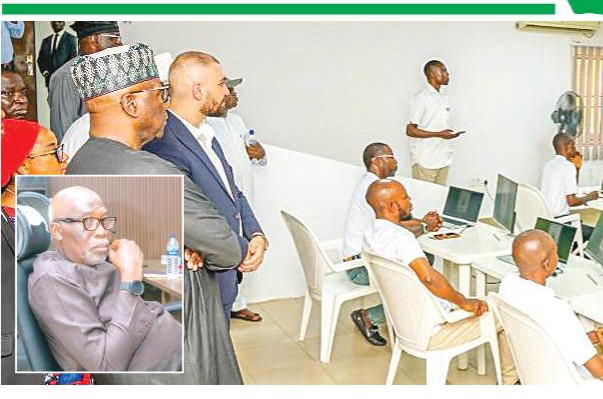
“With the introduction of digital file management, automated workflows, and electronic billing systems, land documentation processes have become faster, more transparent, and easier to track. As a result, applicants can now monitor the progress of their files with greater clarity, while digital records help reduce the risks associated with file loss, manipulation, and unnecessary delays. “Today, KWGIS stands as one of the clearest examples of institutional reform in Kwara State. KWGIS is driving digital transformation while at the same time restoring public confidence.
This transformation goes beyond technology. More importantly, it is about restoring public confidence in land administration. “The Governor’s vision for KWGIS was never limited to computers and software. Rather, the objective was to build an institution where citizens feel respected, protected, and properly served”, he added. Abdul Kareem also said that KWAGIS was about creating a system where professionalism replaces uncertainty and where landowners can access government services without fear or exploitation. He added that under the current leadership of KWGIS, the agency has strengthened service delivery standards, improved customer engagement, enhanced transparency in billing, and introduced systems that reduce opportunities for abuse. Consequently, he said Kwarans are beginning to experience a more organised, accountable, and responsive land administration process. He also said that the benefits of creation of KWAGIS extend beyond documentation. According to him, “a functional land administration system creates economic opportunities for individuals and businesses alike and when land titles are secure and properly documented, property owners can invest confidently in development. They can access mortgages, secure loans, build homes, establish businesses, and contribute more actively to the economy. “Likewise, transparent land administration systems inspire investor confidence. Investors are more willing to commit resources to environments where land ownership records are reliable, accessible, and professionally managed. For this reason, the reforms within KWGIS are critical to the broader economic future of Kwara State. The reforms in KWAGIS are also supporting physical planning and urban development.
“Through modern mapping systems, advanced survey technologies, and improved coordination among technical departments, the state is laying stronger foundations for smart city initiatives, urban renewal programmes, and strategic development projects. As these systems continue to evolve, they will play an increasingly important role in shaping a more organised and sustainable urban future for Kwara State”, he added. As the reforms continue to deepen, one fact is becoming increasingly clear: KWGIS is not merely processing land documents.
The agency is helping to build a modern Kwara State where governance works better for the people, development is better planned, and citizens can participate more confidently in the state’s economic future. That is a vision worth supporting. For many Kwarans, it is already becoming a reality.